
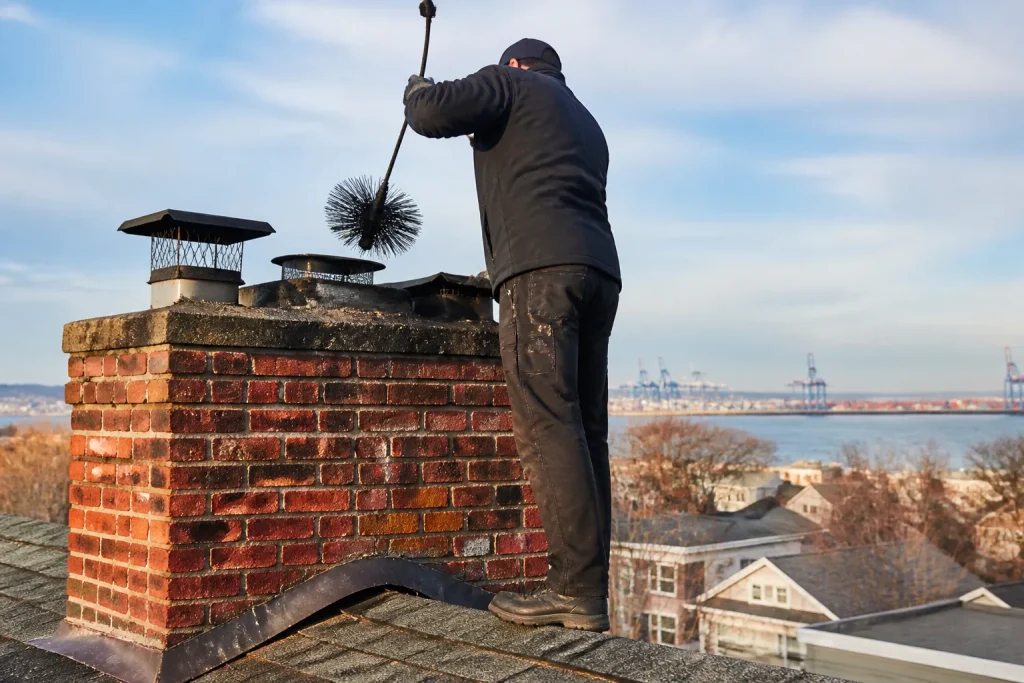
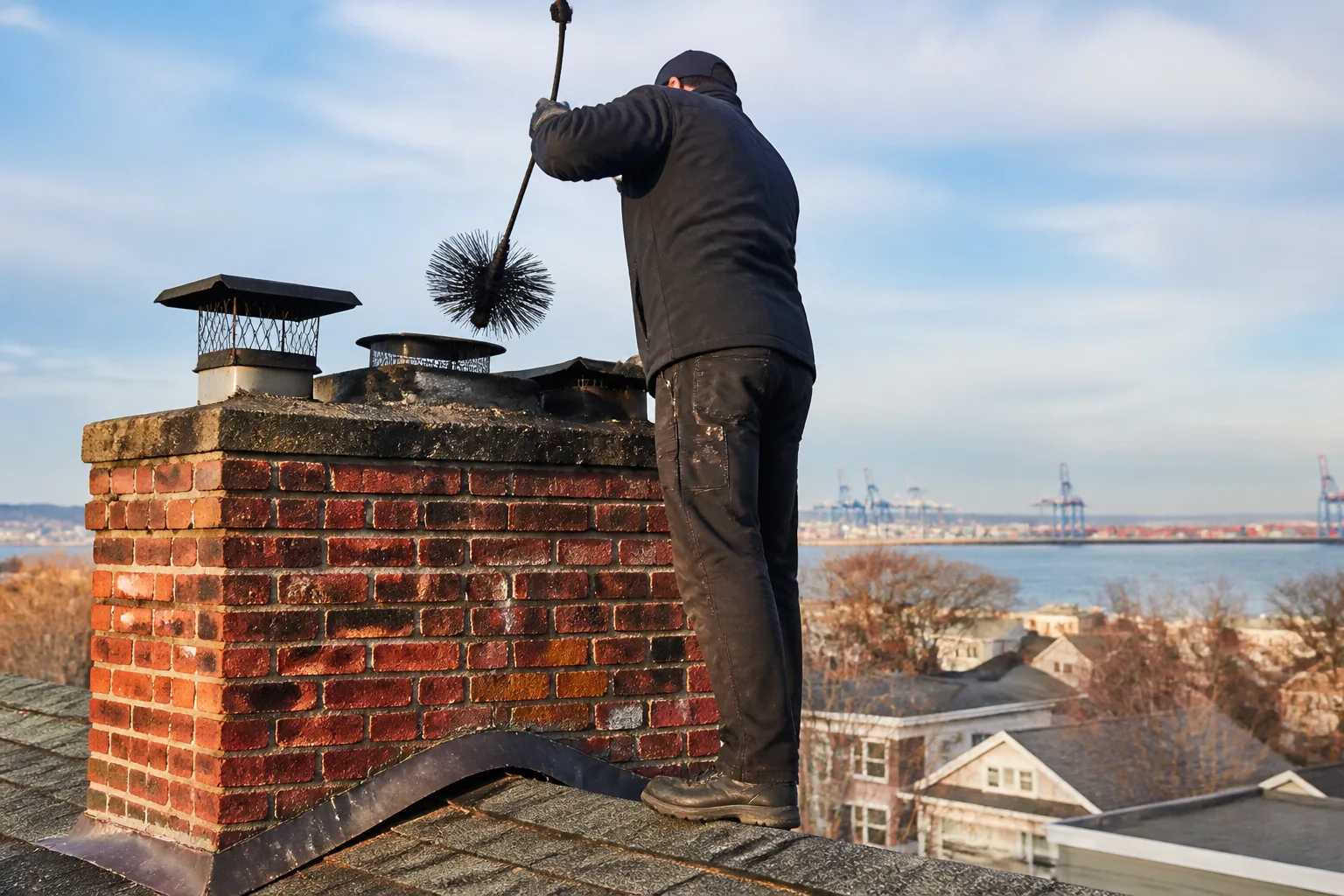
Top Signs You Need Chimney Cleaning Service – Don’t Ignore These
A chimney can be one fire away from a house fire and show no smoke, no smell, and no visible debris in the firebox. That’s the part that surprises people: the most dangerous condition in a flue, Stage 3 glazed creosote, usually gives you nothing to see from the living room. The signs you can detect are subtler, and they show up in smell, smoke behavior, sound, residue, and draft long before anything dramatic happens. Here’s what to actually watch for in Port Richmond. If you’d rather have a specialist look than guess, call (855) 789-9672.
The Creosote Stages, Explained Plainly
Creosote is the tar-like residue left behind when wood smoke cools on the way up the flue. It builds in layers, and the layers behave very differently. Understanding the stages explains why “I’d know if something was wrong” is the riskiest assumption a fireplace owner can make.
- Stage 1: Soot and flaky, dusty creosote. It brushes off easily during a routine sweep. This is normal buildup from a season of burning and not dangerous on its own.
- Stage 2: Hard, crusty, tar-like deposits that cling to the flue walls. It takes more work to remove but is still manageable with proper tools. This stage is where draft starts to suffer and you may begin to notice smoke rolling into the room.
- Stage 3: Glazed creosote. It looks like shiny, hardened tar and is the most flammable form. A hot ember or a spike in flue temperature can ignite it, and this is the stage that causes chimney fires. You often cannot see it from the firebox at all.
The first two stages are why annual sweeps matter. Stage 3 is the reason we treat every home in Port Richmond with an inspection mindset, not just a cleaning mindset. If a flue has glazed creosote, standard brushing won’t remove it; that’s where specialized resurfacing comes in.
The Five Sensory Warning Signs (And What “Abnormal” Actually Means)
You don’t need a camera to notice most problems. Your senses pick up the early warnings long before a professional inspection confirms them. The trick is knowing which sensations are normal and which aren’t. Here’s the breakdown for Port Richmond homeowners:
- Smell: A faint smoky odor during a fire is normal. A strong, acrid, tar-like smell that lingers after the fire is out, or a smell in a room with no fire burning, points to creosote buildup or a draft problem. If your fireplace smells worse in humid weather, that’s often residue reacting to moisture.
- Smoke behavior: A little spill when you first light a fire is normal. Smoke that rolls steadily into the room, won’t go up the flue, or backs up when you open the door points to a blocked or undersized flue. That’s a sign the chimney needs attention.
- Sound: A low rumble during a fire can be normal draft. A roaring, crackling sound that sounds like a freight train, or tapping and flaking sounds from inside the flue, is not. Those can indicate a chimney fire or crumbling liner.
- Visible residue: A little black soot near the damper is typical. Crumbly black or brown flakes falling into the firebox, or shiny black glaze on the flue walls (if you can see them), signals advanced creosote.
- Draft feel: A weak draft that takes a long time to catch, or cold air pushing back into the room when the fire is out, suggests blockage or a failing flue. Hold a hand near the open damper on a cold morning; if you feel little to no pull, that’s worth investigating.
When signs like these pile up, it’s time for a chimney sweep and inspection before the next burn.
Why Annual Sweeps Matter More For Gas Fireplaces Than You’d Think
Gas fireplace owners often assume a sweep is unnecessary because there’s no wood, no soot, and no creosote. That’s half true. Gas burns cleaner, but it still produces moisture, and it still creates conditions that can damage a flue over time. For gas systems, the annual visit is more about inspection than cleaning.
The different risk profile is real. A gas fireplace can vent acidic moisture that corrodes a metal liner or mortar joints. A blocked or deteriorated vent can let carbon monoxide back into the home, and that gas is odorless. You won’t smell it and you won’t see it. That’s why we treat every gas fireplace inspection in Port Richmond as a safety check first. If the liner looks compromised, we may recommend a product like HeatShield ceramic resurfacing to seal and restore it, or a DuraFlex liner system for a full reline when the damage is more extensive.
For wood-burning systems, the annual sweep removes creosote and gives us a chance to confirm the flue is sound. For gas, it’s the opposite emphasis: we inspect the venting and connections, and clean only what needs it. Either way, the visit is the point. Skipping a year because “it’s just gas” is one of the most common mistakes we see.
Row-Home Chimney Problems In Port Richmond That Show Up Next Door First
Port Richmond’s dense row-home blocks create a chimney situation that suburban homeowners don’t deal with: shared chimney walls and multiple flues bundled into one stack. That means a problem in your flue can make itself known in a neighbor’s unit before it shows up in yours.
Here’s how that plays out. If your flue is blocked or has heavy creosote, smoke can migrate through shared masonry into an adjacent flue. A neighbor might notice a smoky smell or a draft issue in a fireplace they haven’t even used. If their unit shows the symptom, the cause could be on your side of the wall. That’s why our inspections in Port Richmond pay attention to the whole stack, not just the flue tied to your firebox.
Multiple-flue stacks also need each flue checked separately. One flue can be clean while the one beside it is heavily coated. We inspect each one on its own, and if a cap or crown is failing on the shared stack, that’s a shared problem worth catching early. Industry-standard products like Olympia Chimney and Copperfield caps and covers give us durable options that fit precisely to the stack, rather than a generic cover that leaves gaps for water and animals.
The Sign Most Homeowners Dismiss As Cosmetic: White Staining
White, chalky staining on the exterior of your chimney is called efflorescence, and it’s the one warning sign most often waved off as cosmetic. It isn’t. Efflorescence is what happens when water moves through masonry and evaporates on the surface, leaving mineral deposits behind. The stain is the visible tip of active water infiltration.
Ongoing moisture in a chimney does real damage over time. It can freeze and thaw inside the masonry, cracking bricks and mortar. It can rust a metal liner or break down a flue. It can soften a crown until it fails. And all of that affects how safely the chimney vents. If you see white staining on the brick in Port Richmond, treat it as a prompt to have the chimney inspected, not a reason to reach for a scrub brush. Cleaning the surface without fixing the water path just hides the evidence.
Water entry usually traces back to a few culprits: a failing crown, a missing or damaged cap, or cracked mortar joints. Fixing the source is the same job as protecting the chimney. Our chimney cap & crown work addresses exactly this, using caps from brands built for durability and fit precision rather than the cheapest generic cover.
When To Call A Pro
Some signs are worth acting on right away; others can safely wait. Here’s a quick guide.
Call now, and stop using the fireplace until it’s checked: a roaring sound from the flue, smoke backing heavily into the room, a strong tar smell that lingers, or visible shiny glaze on the flue walls. These can indicate a chimney fire or Stage 3 creosote, which is a genuine safety concern.
Book an inspection soon: white efflorescence on the exterior, crumbly flakes in the firebox, weak draft, or a yearly burn season where you can’t remember the last sweep. These aren’t emergencies, but they shouldn’t wait indefinitely.
Fine to monitor: a little soot near the damper or a faint smoky smell during a fire. Normal, but worth a glance at your next sweep.
We work on chimneys, and only chimneys. When we inspect, we use a camera, and you see the photos for yourself. Nothing gets recommended without evidence you can look at. If a repair can safely wait, we’ll tell you that too. If your fireplace itself is acting up, our fireplace repair side covers that as well, so you’re not chasing a second contractor.
The Bottom Line
The signs that matter most are the ones you can’t see: Stage 3 glazed creosote sits quietly in the flue until a chimney fire starts. Watch for the sensory warnings (smell, smoke, sound, residue, draft), take annual sweeps seriously even with a gas fireplace, look out for neighbor-first symptoms in a row-home stack, and never dismiss white staining as cosmetic. Our technicians have up to 14 years of experience, and every inspection comes with camera evidence and a photo report you can review. If you’re in Port Richmond and need help, Port Richmond Chimney Sweep offers free estimates. Call (855) 789-9672. We answer 24/7, with fast dispatch from 7am to 7pm, Sunday through Friday.
Frequently Asked Questions
Once a year is the standard recommendation for a wood-burning chimney, and annually for a gas fireplace as well, even though gas needs less cleaning and more inspection. If you burn heavily, sweep more often. A blocked or heavily creosoted flue is a safety issue, so don’t stretch the interval. Call (855) 789-9672 for an exact quote on a sweep, and estimates are free.
You can sweep light soot with the right brushes, but you can’t reliably assess creosote stage, liner condition, or carbon monoxide venting from the firebox. Those are the parts that matter for safety. For a system this consequential, a professional inspection is the safer call. Call (855) 789-9672 to book one, and estimates are free.
Creosote keeps building, and at Stage 3 it becomes flammable glazed tar that can ignite into a chimney fire. You may not see or smell it beforehand. On gas systems, skipping the annual inspection can let a damaged liner vent carbon monoxide into the home. Both risks are why the annual visit exists. Call (855) 789-9672 for a free estimate and a clear picture of your chimney’s condition.
Possibly, and possibly not. A lightly used fireplace may only need a light sweep and a check, but a flue can still collect creosote or develop a draft problem. An inspection tells you which. Our visit includes camera inspection and a photo report, so you can see for yourself. Call (855) 789-9672 for a free estimate.
Related services in Port Richmond: Port Richmond Chimney Sweep handles sweeping, inspection, repair, and caps under one roof.
Written by the team at Port Richmond Chimney Sweep.
Need Chimney Cleaning Help?
Call Port Richmond Chimney Sweep - the local pro we connect you with is licensed and insured, here with fast help in Port Richmond.
(855) 789-9672